
The Builder Says It Passed Code—Do You Still Need a Home Inspection?
Buying a brand-new home is exciting. Everything is new, permits were pulled, and the home went through required inspections. I recently had a buyer tell me their builder said they did not need an independent home inspection because the home had already passed its code inspections.
That raises an important question: If a brand-new home passed its required inspections, why pay for another inspection?
A code inspection and an independent home inspection have different purposes.
Passing Code Doesn't Mean Every Item Is Perfect
Building-code inspections are an important part of new construction. They help determine whether work complies with applicable requirements at different stages of construction. An independent home inspection provides something different: another set of eyes evaluating the accessible systems and components of the completed home for you, the buyer.
New construction can still have installation defects, incomplete work, damaged components, safety concerns, and systems that need adjustment or correction.
These Were Found in One Brand-New Home
The following are not examples collected from old houses. These conditions were documented during a single new-construction inspection performed by Peace of Mind Home Inspections.
1. Garage-to-Home Door: Missing Wedge Gaskets

Light was visible at the bottom corners of the garage-to-home entry door because wedge gaskets were missing. Because this door separates the garage from the living space, proper sealing and installation are important.
2. Garage Separation Wall: Exposed Wood

Exposed wood was observed at the bottom of the garage separation wall. The builder was advised to properly cover and finish the exposed area and restore the intended separation between the garage and living area.
3. Garage Entry-Door Hinges: Missing Frame Screws

The garage entry-door hinges were missing screws at frame-side hinge locations. The builder was advised to install the missing fasteners and verify that the jamb was properly secured to the wall framing.
4. Rear Porch Exit: Excessively Steep Grade

The ground immediately beyond the rear screened-porch exit sloped steeply downward. This created a potential trip or fall concern and demonstrated why exterior grading is part of a thorough inspection.
5. HVAC Cooling Performance Concern
Testing identified a low temperature differential at the HVAC system. A home can look complete while a major mechanical system still needs evaluation, adjustment, or commissioning.
6. Tankless Water-Heater Exhaust Penetration

At the tankless water-heater exhaust penetration, the wall gasket was displaced and part of the opening remained exposed. The builder was advised to correct the mounting arrangement, properly seal the penetration, and verify the vent connection.
Slab-Edge Anchor Location: Chipped Concrete / Visible Epoxy
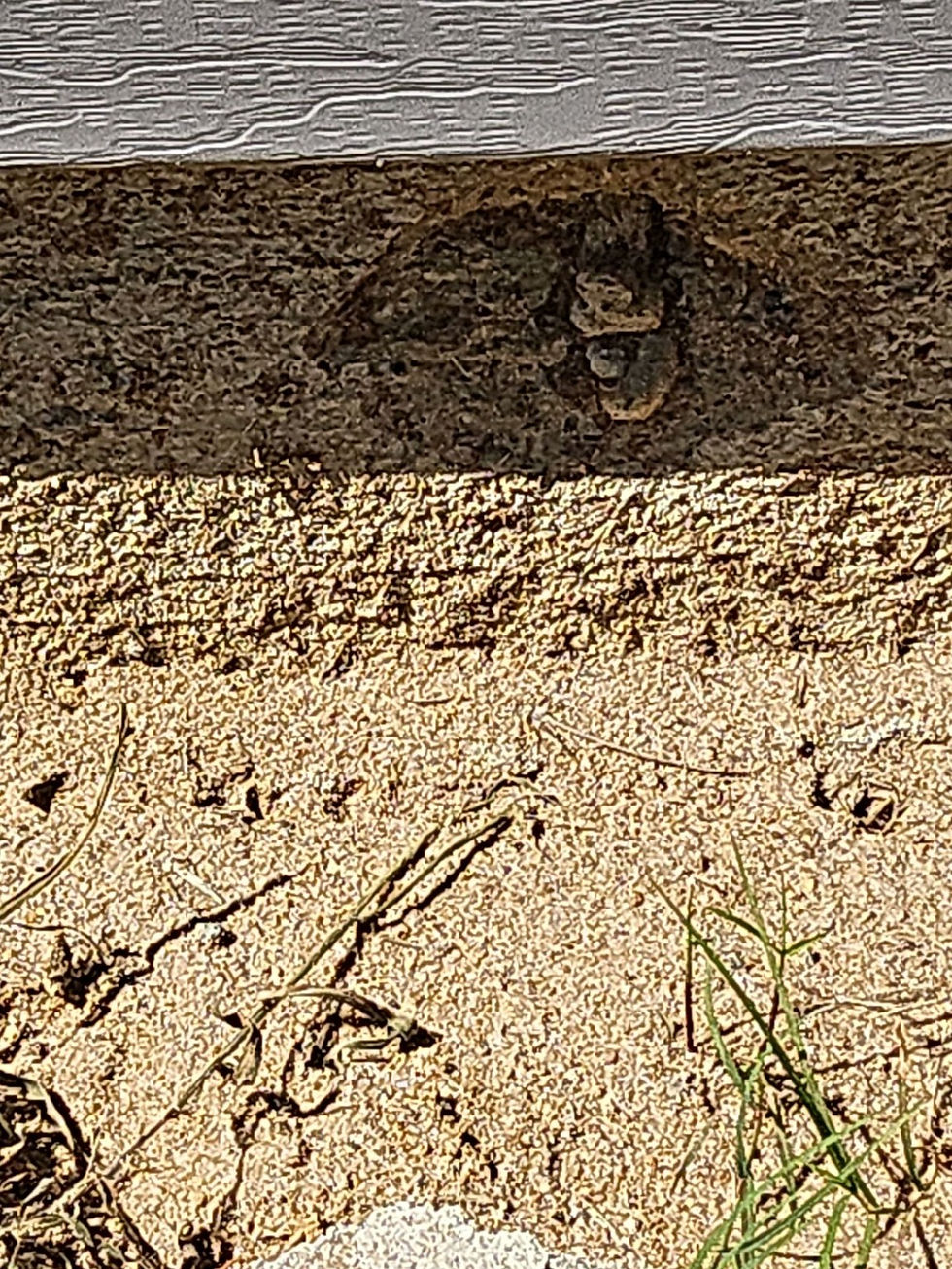
Chipped concrete and visible epoxy were observed at slab-edge anchor locations. The builder was advised to evaluate and properly repair the affected areas and verify the anchors were adequately secured.
And Those Weren't the Only Findings
The same inspection also documented additional items including a missing dishwasher drain high loop, inadequate hot water at bathroom sinks, incomplete window caulking, a large gap at a bathtub surround seam, damaged kitchen flooring, and unfinished drywall work.
How Can This Happen on a Brand-New House?
Building a house involves many different trades working at different stages: framing, roofing, electrical, plumbing, HVAC, insulation, drywall, siding, flooring, painting, and more. Even with a reputable builder and skilled tradespeople, items can be missed, damaged, left incomplete, or changed as construction progresses.
That does not automatically mean someone failed to do their job. It means construction involves a lot of moving parts, and an independent inspection gives the buyer another opportunity to learn about the condition of the home before closing.
What I Look at During a New-Construction Final Inspection
At Peace of Mind Home Inspections, a new-construction final inspection includes a visual evaluation of accessible systems and components of the home. Depending on the property and accessibility, this can include the roof, exterior, attic, insulation, electrical system, plumbing, HVAC, interior rooms, doors, windows, installed appliances, garage, foundation, slab or crawlspace, and other accessible components.
When appropriate, thermal imaging may also be used as an additional inspection tool. Findings are documented in a detailed digital report that the buyer can review and use when communicating with their agent and builder.
What If You Missed the Pre-Drywall Inspection?
You can still have the completed home inspected. A pre-drywall inspection can be valuable because framing and other components are visible before drywall conceals them, but missing that stage does not mean you have missed your opportunity altogether. A new-construction final inspection can still provide valuable information before closing.
Don't Forget the 11-Month Warranty Inspection
Many new homes come with a builder warranty covering certain items during the first year. An 11-month warranty inspection can document visible conditions that have developed or become apparent after you have lived in the home, giving you a report to review before the applicable warranty period expires.
Your New Home Is a Major Investment
A new home can be beautiful, pass its required inspections, and still have items worth addressing. The question is not whether you trust your builder. The question is whether you want an independent inspection of the home you are about to purchase.
New Doesn't Mean Perfect.
Peace of Mind Home Inspections serves Florence, South Carolina and surrounding areas. Call 803-331-6281 to schedule your independent new-construction inspection before closing.
Comments